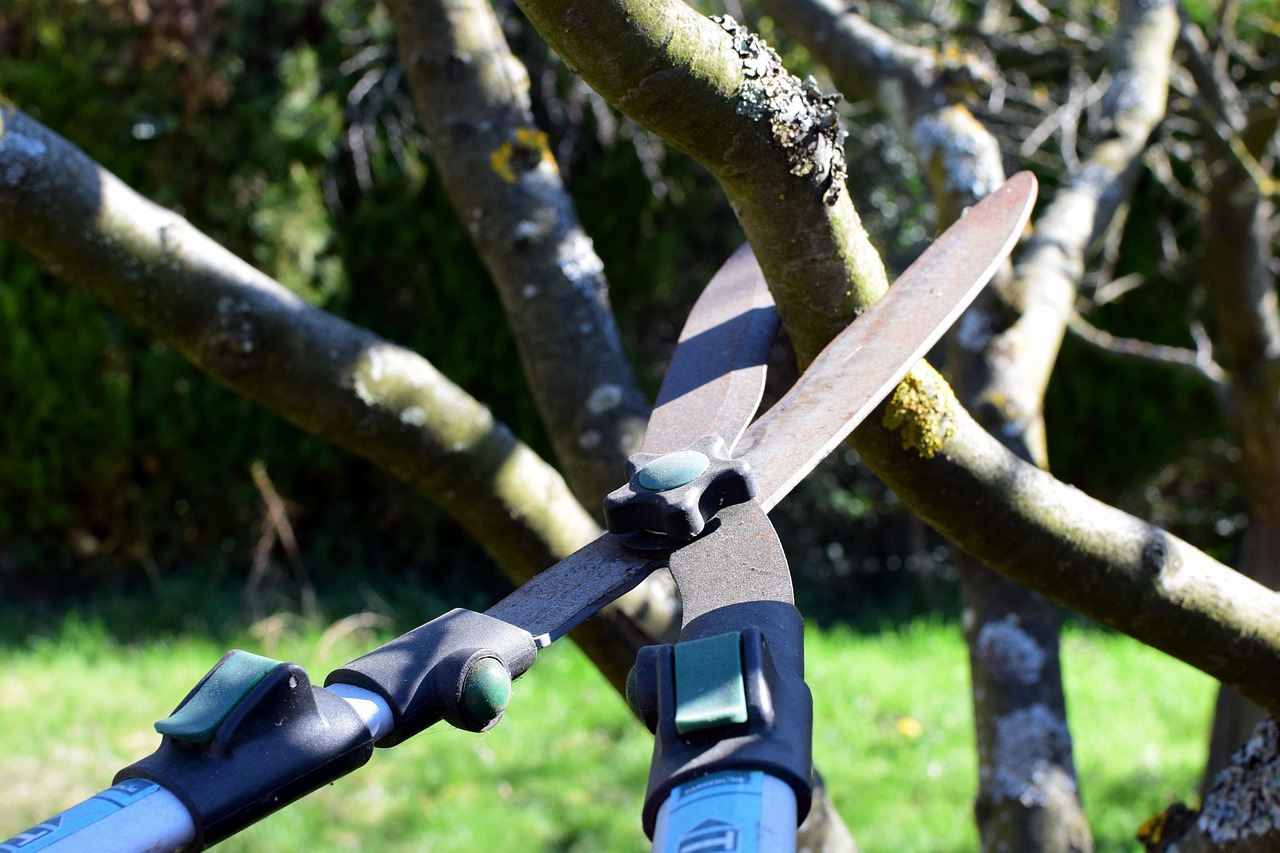
Tree trimming in Sunnyvale, CA is the targeted pruning of shade trees and fruit trees so they stay healthy, keep a good shape and stay off houses, driveways and wires. It’s for Sunnyvale homeowners with trees over low Eichler or ranch-house roofs, crowded canopies blocking light, or backyard fruit trees that have grown too tall to harvest. Thoughtful pruning removes what the tree doesn’t need and leaves its natural form. The payoff is a healthier tree, a cleaner roof and a more usable yard.
What Tree Trimming Includes
Each tree gets a plan suited to its species, age and condition. That can include:
- Crown thinning to open up dense canopies and reduce weight on long limbs.
- Crown raising to clear sidewalks, driveways and the roofline.
- Reduction pruning to shorten limbs reaching over the house or neighboring yards.
- Structural pruning on young trees to build a strong framework early.
- Fruit tree pruning timed to the species, to manage height and encourage good fruiting wood.
- Dead wood removal from the crown, where brittle limbs could fall.
Cuts are placed at branch collars or at suitable side branches so the tree can seal them naturally.
When a Tree Needs Pruning
- Limbs rest on or overhang a low roof, dropping leaves into gutters and onto flat roof surfaces.
- The canopy blocks light to the house, garden or solar panels.
- Dead branches appear high in the tree.
- A fruit tree has grown too tall to harvest or is dropping limbs under the weight of fruit.
- Branches are approaching lines running to the house.
- A young tree is developing two leaders or tight, weak forks.
Why Sunnyvale Trees Get Overgrown
Sunnyvale’s mild climate lets trees grow for much of the year, and irrigated lawns and gardens feed that growth. Trees planted when homes were built in the mid-20th century have had decades to spread. Many were planted close to the house, so even moderate growth brings limbs over the roof. Fruit trees left unpruned for a few seasons shoot upward quickly and lose their productive lower branches to shade.
Dry summers and occasional drought years also leave dead wood behind, which builds up in the crown if it isn’t cleaned out.
How a Trimming Visit Works
- Review the trees with you and agree on the goals, such as roof clearance, more light or a shorter fruit tree.
- Protect the property, including roofs, glass walls, garden beds and patio furniture.
- Reach the canopy by climbing, ladder or extension saw, whichever suits the tree.
- Work through the canopy branch by branch, easing big pieces down over roofs and fences.
- Chip and clean up, including gutters and flat roofs near the work area.
Factors in the Cost of Trimming
- Tree size and species, and how much pruning it needs.
- Access, such as narrow side yards or trees behind a pool.
- Low roofs and glass walls that require careful rigging.
- Dead wood and storm damage in the canopy.
- Fruit tree work, which often involves many small, precise cuts.
- The number of trees pruned in one visit.
A free quote visit gives you an accurate price for your trees.
Prune It or Remove It?
Choose pruning when the tree itself is in good shape and only its size, form or reach is the trouble. If the trunk is decayed, the tree is dying, or roots are causing damage that can’t be managed, tree removal may be the better answer, keeping in mind that large trees may be protected and require a permit. We’ll walk you through both options.
What Happens If Pruning Is Delayed
Without pruning, limbs keep growing over the roof, dead wood accumulates and fruit trees become harder to manage each year. Heavy limbs are more likely to break in winter storms, and debris on low or flat roofs can lead to drainage problems. Where a tree has already been cut down, stump grinding takes out what remains.
Related services in Sunnyvale